Improving Grass Root Growth -
Tips and Techniques
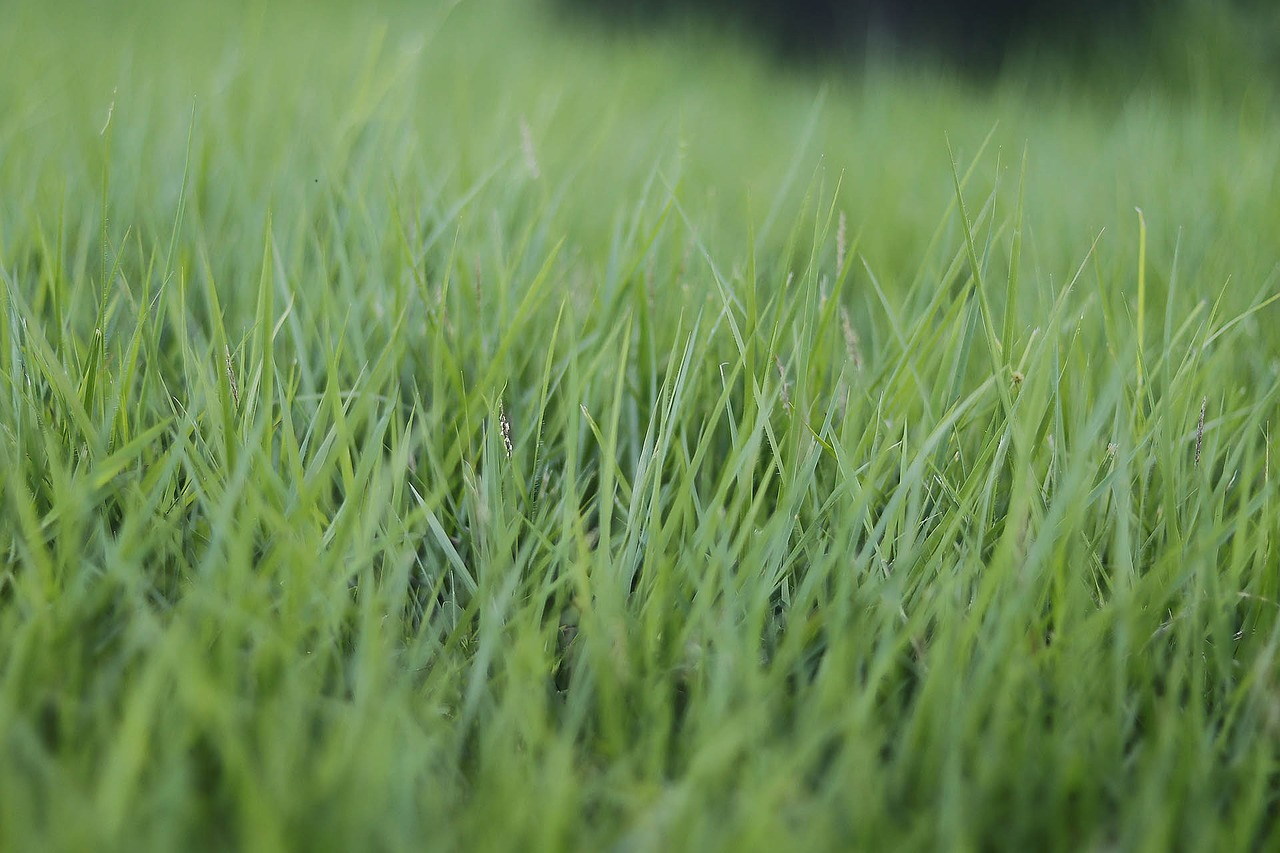
It may not appear so, but grass root growth is as important as blade quality. Roots and blades have a direct relationship to each other. The roots are extremely complex systems.
Grass root growth reaching deeply into the soil is one of the greatest factors
that help extend grass life and lower fertilizer use. It also increases efficiency of nutrient
uptake. In addition, well developed grass roots can slow or prevent
leaching of chemicals and nutrients by as much as 100 percent in some
situations.
Several important cultural practices are important for developing deep and far reaching roots. Below are some of the more important practices used for improving grass root growth.
- Mowing Height -Mowing height may affect grass root growth more than anything else. There is a direct link between grass height and root depth. As a rule, the higher the grass is cut, the deeper the roots go. This is especially true of cool season turf grasses, such as the fescues and ryegrasses. Note "Mowing height" does not mean that you let your grass grow tall before cutting it, it means you mow it at a higher level each time you mow.
Most people cut their lawns too low. Tall fescue, bluegrass, ryegrass, and a few species of warm season grasses can be maintained at 3 to 4 inches all year. Deeper roots help grasses to endure heat and environment stress much easier as well.
There are some exceptions. Some grasses are designed to be maintained at lower levels. Bentgrasses, some zoysia species, improved bermudagrasses, centipedegrass and others. For certain species it is more important to cut your grass at the correct level. Grasses will use nutrients at their greatest efficiency when maintained at their proper level.
- Proper Irrigation- Not everyone is blessed with sufficient rainfall all year. Where irrigation is necessary, remember the number one principle: shallow, frequent irrigation produces shallow roots. This is true for all grasses.
For most grasses, watering deeper, but less frequently is the number one way of stimulating deeper grass root growth. After watering, the soil should be moist at 4 to 6 inches below the surface. These deeper soil depths will remain moist long after the surface has dried. The grass should not be watered again until the blades start to show signs of drought stress. This trains the roots to reach deeper where the ground is more consistently moist.
Please don't think you are harming your grass by waiting to water when grass begins to show signs of drought. This is a long established principle for deeper grass root growth used around the world. Grass has a built-in mechanism to slow water loss during periods of dry, hot weather. To hinder water loss the blades will fold, which shows the lighter blueish green underside. This change in color is a clear signal it is time to water again. A second sign is when you walk across the grass and the blades do not immediately begin to spring back upright. Very hot, dry weather may require more frequent irrigation, but the principle of watering remains the same. You will still water far less than your neighbors who do not know about proper irrigation techniques and will have better grass root growth. Cooler weather will require less water.
During hot weather, it is best to water early in the morning. Setting your timer so the water comes on at 4:00 or 5:00 am is good. Try not to water in the evening or at dark where the ground remains extra wet all night. Many diseases need prolonged surface soil moisture to get started. See our section on grass diseases for more information.
There are some exceptions, however. Sandy soil does not retain water well, so deep water may not be helpful. For extremely sandy soil, the only option is to add organic matter to the soil for better water retention or water more frequently. The grass will tell you when it is time for more water.
- Soil Conditions- The type of soil you have will either encourage or discourage deep root development. Heavy clay soils, while it offers good water retention, also compacts easily and can become waterlogged. Incorporation of organic matter, such as compost, will loosen the soil and provide better air exchange.
A product called Turface was developed by the sports industry for use on clay baseball infields. It is applied to infields because of its ability to quickly absorb large quantities of rain water without becoming slippery. Its water and air retention capabilities has made it a great product for use on lawns and in container gardens, as well as artificial soil in bonsai plants and aquariums. About the size of large fertilizer granules, it absorbs 10 times its weight in water and evenly releases the water over time. It can be expensive for large lawns, but it doesn’t break down after it is applied. Once applied and worked into the soil, it is permanent. This is a great option if you use your lawn for activities such as weddings, social gatherings or other activities. I know of a number of outdoor wedding that were saved with Turface.
Sandy soil doesn’t retain water well. Incorporating organic matter provides nutrients and greatly increases water retention. In extremely sandy soil, adding organic matter to form a 50/50 mix in the top six inches of soil may be needed.
- Use the Correct Fertilizer- Slow release fertilizers are favorites for those promoting grass root growth. Slow released nutrients are distributed over time as opposed to fast release fertilizers that release all the nutrients at once.
Fast release fertilizers (a.k.a., all mineral) tend to be less expensive, but most nutrients are not used by plants and leach below the root zone. Due to the high salt content of all mineral fertilizers, they must be watered in to keep from burning. Depending on conditions, as much as 80 percent can leach below the root zone and is never used to help develop grass root growth.
Fertilization is a science and knowledge is the key to maintaining your lawn successfully. For developing a good lawn fertility plan, click on the fertilization and organic pages to see how they are best used.
- Soil pH- Different grass species can have a slightly different pH that they grow best in. Adjusting the pH is not difficult. First, check the soil pH by submitting a soil sample through your county extension office or by using an over-the-counter soil pH kit. These over-the-counter kits are not as accurate, but they will give you an estimate of your soil pH conditions.
Remember that organic matter is usually at or near neutral pH. If your pH is only slightly off, the addition of organic matter may fix it. If not, either limestone (for acidic soils) or sulfur (for alkaline soils) may be needed. These can be purchased at your local home and garden store.
Using Agri-Gro Biostimulants to Increase Grass Root Growth
AgriGro Biostimulants are proven to increase root growth in all plants it was applied to. This is one of the reasons the plants are able to endure environmental stress better than plants that have not received treatments.
In addition, the increased bioactivity, increased nutrient uptake, and increased disease resistance are added reasons to use these products. If you would like more information on Agri-Gro Biostimulants and how it can increase grass root growth, please see our page on What Agri-Gro Biostimulants Can Do For Your Plants.
Suppressing Diseases for Better Grass Root Growth
Understanding when and how diseases become active and harm grasses will definitely help maintain good and deep root growth. Disease pathogens must be present for a disease to begin. Soil pathogen remain in the soil so even of you reseed, the grass can still be affected. Use Agri-Gro Bountiful Harvest or Turf Formula to suppress diseases while you fix the problem in the soil.
Many diseases attack roots and develop into root rots that destroy or damage roots. Fix and maintain well drained soils on places where water drainage has been a problem. Seek to improve areas by possibly altering the grade or improving soil quality through deep core aeration and adding high quality top soil or compost.
Where salt from winter deicing is becoming a problem, use Gypsum to remove the salt and allow it to leach down below the roots. Salt affected soils can bind with soil molecules and prevent water from filtering through the soil and this is where gypsum excels. It causes the salt to break lose and return the soil back to its previous condition.
Organic Top Dressing for Lawns
Organic compost top dressing is a fairly new practice for home lawns. Get helpful advice and step by step directions for the best possible results.
Lawn Winterization Techniques
Fall winterization is the most important time for fertilizing cool season grasses. Warm season grasses do not receive the same treatment. Find everything you need to know to correctly winterize both cool and warm season grasses.
Soil Microorganisms
Soil Microorganisms are essential for all plant life. Click here to learn about the different types of soil microbes, the conditions they are most active in and the best ways to stimulate them.
Organic Compost
Compost has many benefits including a source of nutrients. The right blend of organic compost also has a tremendous ability to suppress grass diseases. Find the specifics on what the compost should include, how much to apply and information on how to make it yourself.
Developing a Lawn Fertilization Program
Behind every beautiful lawn is a good lawn fertilization program. Whether it's a championship golf course or your home lawn, certain fundamentals always apply. Click here to begin planning your fertilization program.
Understanding Organics and Organic Lawn Fertilization
Organics can be confusing if you have never used them. Check out this page for an unbiased look at the benefits and limitations of organic products.
Understanding Lawn Fertilizer
It takes more than just spreading fertilizer to create a beautiful lawn. Find out everything you need to know about fertilizer, whats in it, and how to develop a fertility program.
Plant Growth Regulators
Plant Growth Regulators are just beginning to be discovered by homeowners. They are fantastic products with dozens of uses for everything from slowing plant growth to eliminating unwanted tree fruit. Click here to discover what you have been missing.
Grass Root Growth to Lawn Care Academy Home
Share This page:

| Did You Know...? Agri-Gro Biostimulants triggers a sharp increase in root growth in plants. If increased root growth is your goal, you definitely need to try it. Click Here for more information. |